
Stalin liked a good purge! Between 1929 and 1953, 777,975 people were executed after rigged show trials – and that’s just the official figure. Add to that number another half a million who received a bullet to the back of the head in prison basements, with no trial or announcement. It’s time to list the top ten liquidations that resulted in so many Stalinists – screaming their undying loyalty to the dear leader – come to a grisly end.
Let’s delve into horrific tales from the purges that beggar belief. How about the top female Stalinist who denounced her own husband as a Trotskyist and then shot him dead in Stalin’s office – earning some valuable brownie points. She went on to be foreign minister of Czechoslovakia.
Until that is … she got purged!
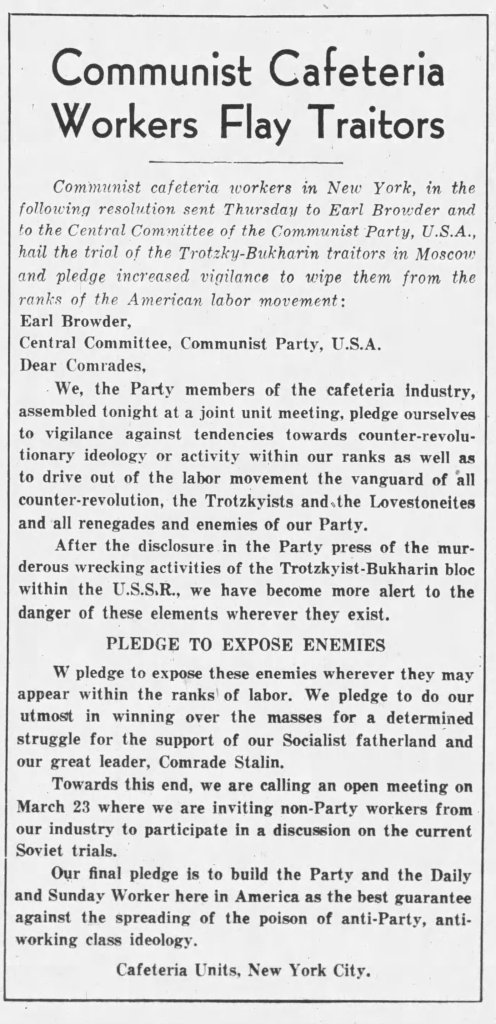
Or then there were the communist New York cafeteria workers who pledged their support for Stalin’s show trials and executions of alleged Trotskyists. Between serving waffles and hash browns, they cheered on the liquidation of class enemies. In March 1938, they posted this bulletin below in the Daily Worker newspaper – the organ of the American communist party – promising to expose traitors within their ranks.
Any deviationist waiters would get their just desserts!
So let’s take a rollercoaster ride through the Stalinist purges that claimed thousands of lives – and the hideous characters who extracted confessions for the Soviet leader.
Stalin’s first purge – 1929-1930
Joseph Vissarionovich Stalin (1878-1953) – real surname Dzhugashvili – was born in Georgia. He wrote poetry, loved watching cowboy movies, trained to be a priest, was scarred physically by smallpox, and was nominated twice (1945 and 1948) for the Nobel Peace Prize.
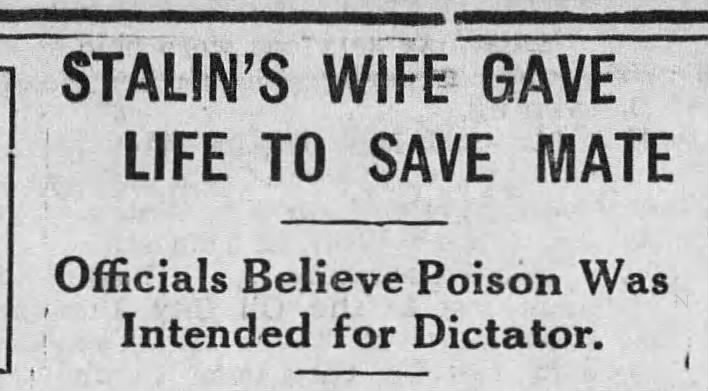
As leader of the Soviet Union, having purged his way to the top, he became increasingly paranoid, even employing a poison taster, known as “the rabbit”. The death of his second wife, Nadezhda Alliluyeva (1901-1932), aged just 31, was incorrectly attributed, in some western newspapers, to her role as an unofficial poison taster. She had eaten toxic food intended for him. In fact, she committed suicide by gun shot after a public row with the dear leader.
Stalin had a small circle of friends who managed to survive his various purges. They included Kliment Voroshilov (1881-1969), Vyacheslav Molotov (1890-1986), and Lazar Kaganovich (1893-1991). But many who had known and worked with Stalin ended up facing the hangman or a firing squad.
It all started to go seriously wrong with his battle to take over the Bolshevik party as Lenin’s health faded. The struggle for supremacy involved a heady mix of ideological differences and personal animosities. In the 1920s, factions emerged within the party. Stalin realised all he had to do was play one faction off against the other to eventually emerge victorious.
The factions were:
- The Left Opposition – led by Leon Trotsky (1879-1940), this faction opposed the drift towards an all-powerful bureaucracy in the Soviet Union and the confining of the revolution to Russia with Stalin’s doctrine of “Socialism in One Country”. Emerging after 1923, it argued for voluntary collectivisation of the land, accelerated industrial development led by the state, and permanent revolution – that is the encouragement of other workers’ revolutions around the world.
- The Right Opposition – led by Nikolai Bukharin (1888-1938), editor of Pravda, Alexei Rykov (1881-1938), and Mikhail Tomsky (1880-1936), argued for a more gradual movement towards socialism in which the market-oriented New Economic Policy, begun by Lenin, would continue with peasants encouraged to get rich quick.
- The Troika – led by Stalin, Grigory Zinoviev (1883-1936) and Lev Kamenev (1883-1936), sought to clip Trotsky’s wings while promoting Stalin’s bureaucratic and totalitarian version of a workers’ state.
Stalin, ever the consummate opportunist, used the Troika to hammer Trotsky and seize the leadership after Lenin died. Then he sided with the Right Opposition to drive out his former allies in the Troika when they dared to voice misgivings about his policies and style of leadership. Once Zinoviev and Kamenev were expelled from the party, Stalin veered back to the left and purged the Right Opposition.
These veteran Bolsheviks – heroes of the 1917 Russian Revolution – were not killed off at this stage. Instead, they were expelled or exiled. Bullets to the back of the head, rigged assassinations, and suspicious car accidents would come in the 1930s.
Zinoviev, for example, was sacked as head of the Comintern (Communist International) in 1926 and removed from the Politburo (highest executive body in the communist party). In 1927, he was expelled from the party. But the following year, he grovelled his way back to holding a party card. For now, he was alive.
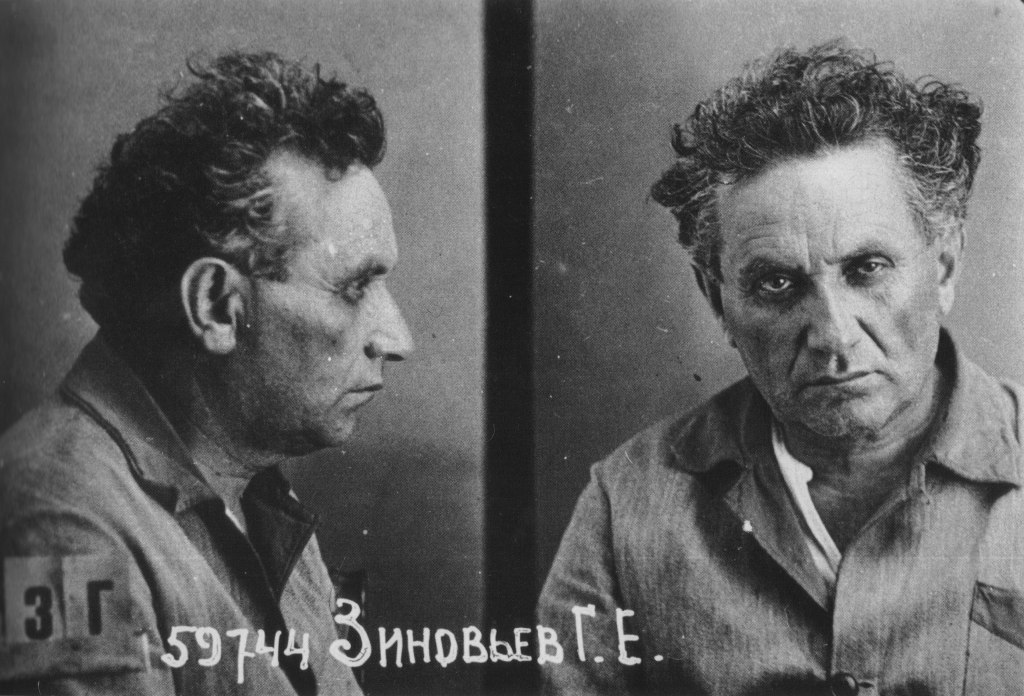
That would all change in the 1930s when Stalin resumed punishing Zinoviev, forcing him to make humiliating confessions. Eventually, in the Great Purge of the late 1930s, Zinoviev was put out of his misery with an executioner’s bullet. He’s pictured below in 1936 – a mugshot taken in an NKVD (forerunner of the KGB) prison – clearly sleep deprived and contemplating his inevitable end.
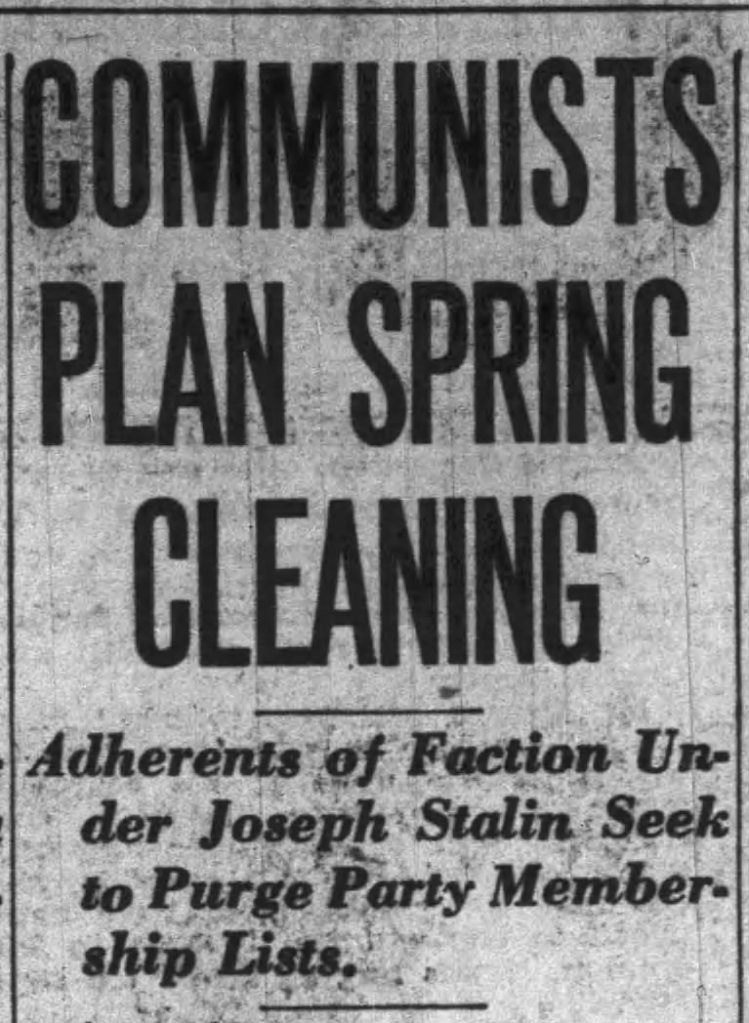
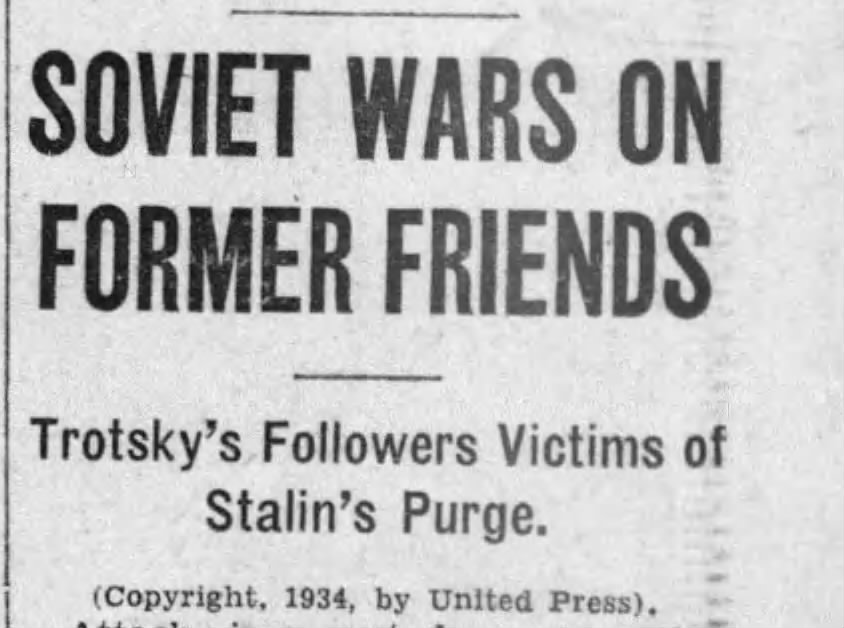
In the west, newspapers struggled to understand what was going on in the Soviet Union. For the USSR’s ideological opponents, this was proof of communism’s inherent barbarity. In contrast, committed communists around the world tied themselves in mental knots convincing themselves that Stalin was stamping out a Trotskyist conspiracy.
Stalin’s second purge – 1932-1935
Sergei Kirov (1886-1934) was another of Stalin’s few friends. Bluff and plain spoken, he was a veteran of the 1905 revolution and a committed Bolshevik. Kirov stood by Stalin in the party battles of the 1920s, making full-throated condemnations of Trotskyites. As a reward for his devotion to the dear leader, he was appointed Leningrad party chief and a member of the Politburo.
On 1 December 1934, Kirov was walking down a corridor on the third floor of the Smolny Institute, a tsarist-era classical building taken over by the Bolsheviks as party offices, when a short, wiry man tiptoed behind him and blew his brains out with a revolver.
Leonid Nikolaev (1904-1934) was the five foot assassin who took out Kirov. The NKVD had already arrested him in October for loitering around the Smolny and yet Kirov’s security detail was not beefed up. Indeed, on the day of the assassination, there was hardly any police protection at all.
This has given rise to speculation that Stalin ordered the killing. One theory is that Stalin thought Kirov was way too popular, posing a threat to his position as top dog in the Soviet Union. What happened immediately after Nikolaev fired his fatal shot certainly raises awkward questions.
The first man to approach Kirov’s bloody body was his bodyguard Mikhail D. Borisov. He died the following day after toppling out of an NKVD vehicle while on his way to be interviewed by an allegedly grieving Stalin.
As for Nikolaev, he was tried the same month along with 13 other “counter-revolutionaries”. Having been found guilty, they were all executed an hour later. Why the rush?
Pictured below is an inconsolable (I’m being sarcastic) Stalin viewing the corpse of Kirov.
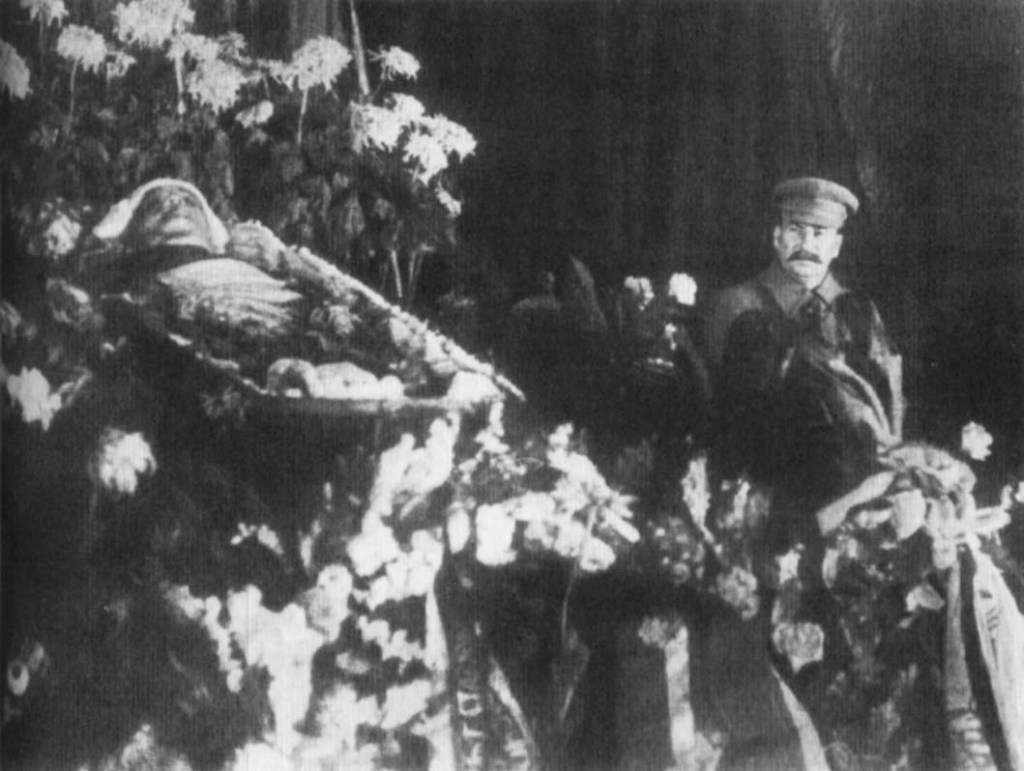
The death of Kirov benefited only one person: Stalin. It gave him the pretext to broaden and deepen his party purge. If he didn’t act decisively, Stalin’s supporters explained, dark forces would derail communism in the USSR and reintroduce capitalism. Stalin pointed an accusing finger at a “Trotsky-Zinoviev” gang, working hand in glove with western imperialism.
And who was in this gang? Zinoviev, Kamenev, and other former members of the Bolshevik central committee. Nikolaev, it transpired, was part of a “terrorist” operation within the communist party that Stalin was now determined to root out.
As Stalin began a new wave of arrests, comparisons were made in the west to Hitler’s purge of the Nazi party in Germany. One newspaper noted how the young Stalin engaged in bank robberies and a few killings, “of which he is particularly proud”. So, it was not unexpected that his purges “should be quite the equal of Hitler in savagery”.
All those found guilty of being complicit in the assassination of Sergei Kirov would soon be executed “in a medieval bloodbath”. Most were denounced as followers of Trotsky. From afar, in exile, he watched as former comrades – and even enemies – were labelled as Trotskyites deserving only death.
Stalin’s Great Purge – 1936-1938
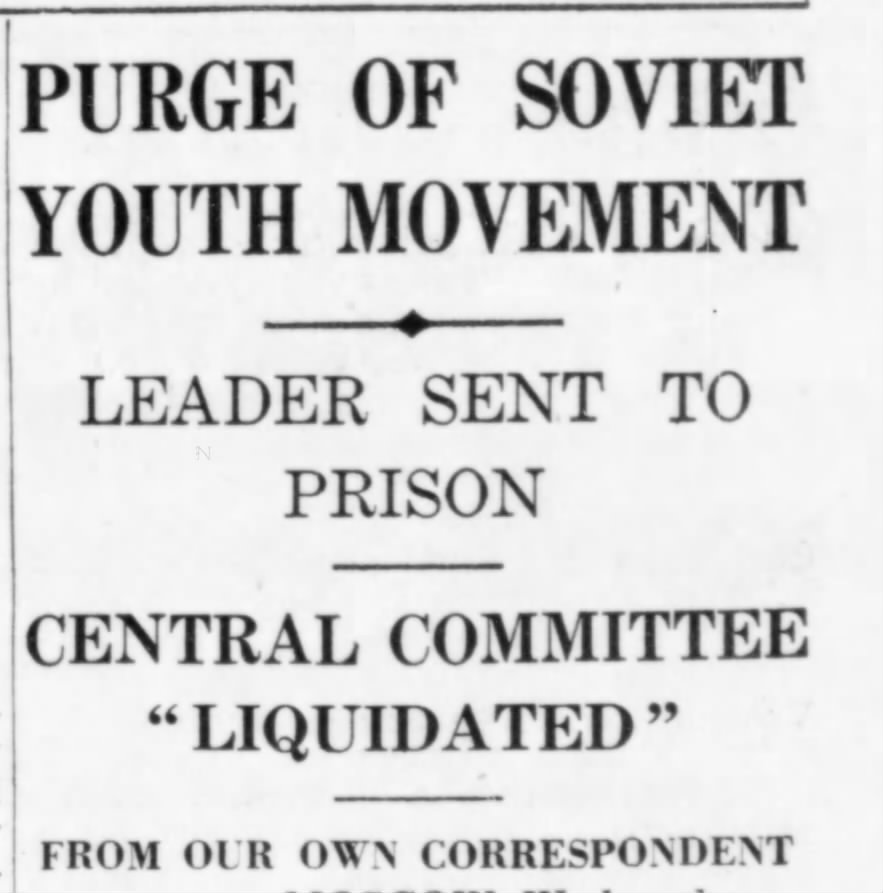
Lenin once said that “he who has the youth, has the future”. But by the end of 1938, Stalin’s view was that the communist youth needed a damned good purging. In November that year, the Daily Telegraph in London reported that the head of the Komsomol (communist youth movement), Aleksandr Kosarev (1903-1939), along with his three assistant secretaries and the entire central committee had been “liquidated”.
Kosarev had remained loyal to Stalin from 1936 when thousands of youth in the Komsomol were rounded up and branded as agents of Bukharin or Trotsky. Teenagers confessed tearfully that they had been counter-revolutionaries since childhood. Very often a Komsomol member would be arrested because one or both parents had been taken into custody. It seems that Trotskyism infected entire families.
Predictably, as this was the youth movement under fire, there were accusations of debauched orgies and sexual perversion. This reflected more on the lurid imaginations of Stalinist interrogators than daily reality in the Komsomol. As will be seen, kinkiness was a character trait of many senior secret police in the USSR.
Kosarev’s fate was sealed when he dismissed an ultra-Stalinist female comrade, Olga Mishkova, whose enthusiasm for the Great Purge led her to denounce the entire Komsomol leadership in Chuvash, an autonomous socialist republic within Russia. A very miffed Mishkova complained directly to Stalin who later clinked glasses with Kosarev at a banquet and hissed: “Traitor! I’ll kill you.”
The dear leader was as good as his word. Kosarev was shot in the Lefortovo prison on 23 February 1939. As for Mishkova, she enjoyed a sudden promotion to chief secretary of the Komsomol.
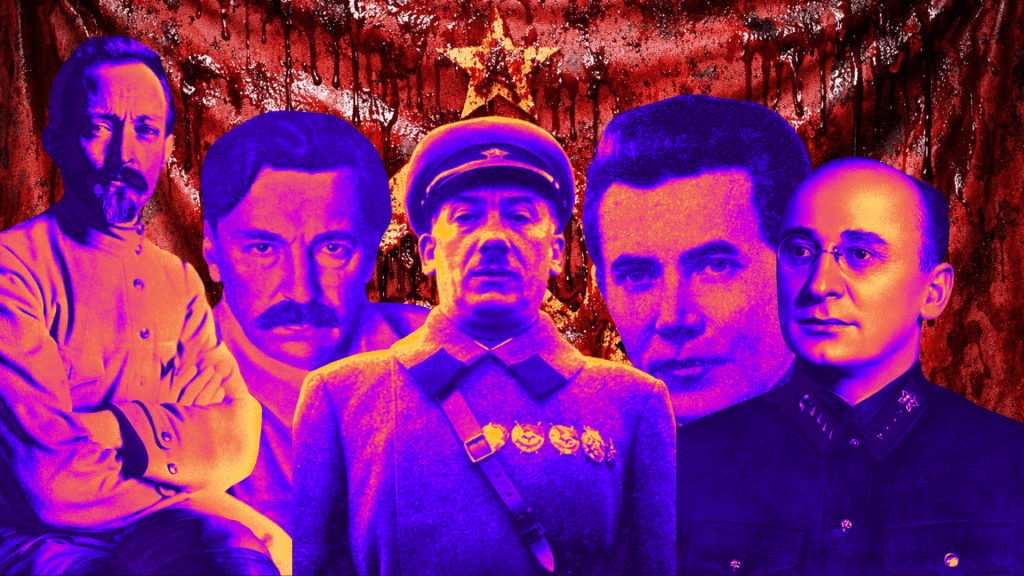
From the Bolshevik seizure of power in October 1917, five key people, pictured below, headed up the communist state’s secret police, which went through several branding and personnel changes:
- Felix Dzerzhinsky (1877-1926) led the first three secret police organisations: the Cheka (1917-1922), GPU (1922-1923), and OGPU (1923-1934). Raised in a devout Polish Catholic family, Dzerzhinsky had considered becoming a priest before finding his calling as the grand inquisitor of Bolshevism. In his youth, he accidentally shot his sister. As head of the Cheka, he was admired for his ascetic and incorruptible lifestyle. Dzerzhinsky died of a heart attack after a fiery speech denouncing his political opponents.
- Vyacheslav Menzhinsky (1874-1934) was also from a Polish background, taking control of OGPU and crushing opposition to collectivisation of the land. He suffered from severe angina and ran the secret police from his couch in the Lubyanka headquarters. In between signing execution warrants, he would read pornographic novels and write erotic poetry. Lenin described him as a “decadent neurotic” while Trotsky dismissed Menzhinsky as a non-entity, a “poor sketch for an unfinished portrait”.
- Genrikh Yagoda (1891-1938) trained as a pharmacist, which was useful when he ran a laboratory for Stalin developing poisons to kill opponents. He headed up the NKVD, the successor secret police organisation to OGPU, and investigated the assassination of Kirov. This led to the first major show trial in Stalin’s Great Purge. The Soviet leader wearied of Yagoda, eliminating him on a trumped up charge that he poisoned Menzhinsky. When his apartment was searched, it was stuffed floor to ceiling with women’s lingerie, sex toys, and other items that proved his moral degeneracy. In 1938, he was executed.
- Nikolai Yezhov (1895-1940) was referred to affectionately by Stalin as yezhevichka (my little blackberry), but the four foot eleven inches head of the NKVD was more widely known as the Poison Dwarf. Keen to please the Soviet leader, he extracted confessions using extreme torture, which was even applied to his ex-boss, Yagoda. After leading the effort on the Great Purge, he was purged. In addition to declaring himself an enemy of the people, Yezhov was coerced into outing himself as a homosexual. Fittingly, he was executed in his own custom made human slaughter house, which featured a sloping floor, allowing for blood to flow away more easily.
- Lavrentiy Beria (1899-1953) took over secret police operations from Yezhov until the end of the Second World War. Sexual perversion seemed to be a hallmark of Soviet internal security bosses and Beria was no exception, abducting girls for his own pleasure. Even Stalin told his own daughter to never find herself alone in Beria’s company. After Stalin’s death, he was purged and executed in 1953.
Between 1936 and 1938, there was a tsunami of arrests and show trials with the prosecution of Yagoda being the most bizarre. He was alleged to have poisoned the famous Russian author, Maxim Gorky, as well as trying to bump off the ambitious Yezhov.
Several leading Soviet doctors stood alongside Yagoda, confessing that they helped facilitate his murders to protect their families. A visibly broken Yagoda took the stand and admitted to plotting with both the Nazis and Leon Trotsky to bring down the Soviet Union.
He was executed along with the cream of the original 1917 revolution Bolshevik leadership, senior military officers, and intellectuals. Stalin congratulated himself on weeding out the Trotskyites and Zinovievites but he left the Soviet Union severely weakened on the eve of the Second World War.
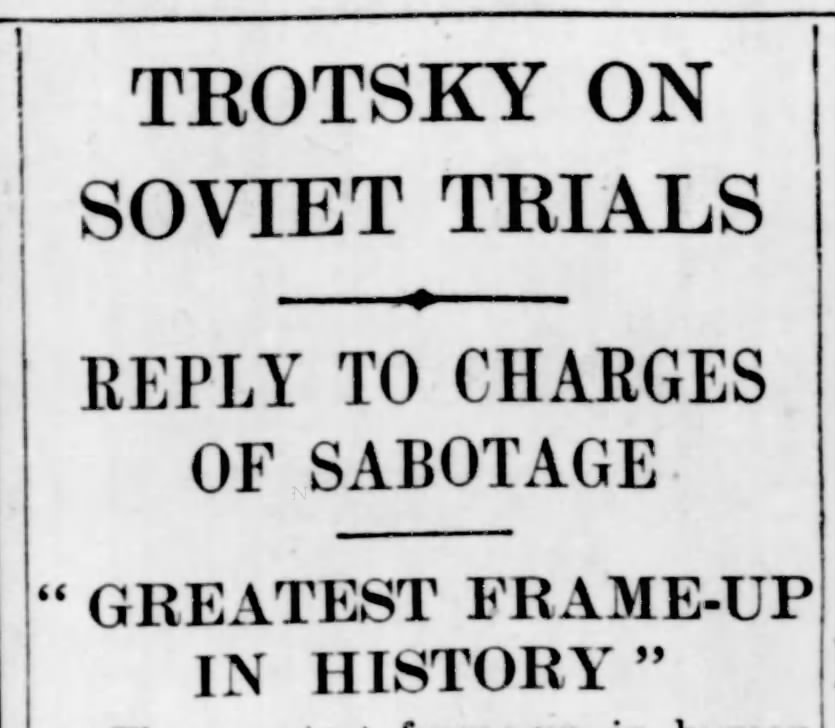
In September 1937, The Daily Telegraph reported that Stalin’s Great Purge had even reached the Buryat-Mongol Soviet Socialist Republic, out in the Far East. The regional government was accused by Pravda, the communist newspaper, of spreading pan-Mongolian ideas and tolerating within its ranks, Japanese spies and counter-revolutionaries.
One local communist bureaucrat was denounced from Moscow as a “Trotskyist-Japanese spy”. This became a familiar Stalinist refrain in the lead up to the Second World War – that Leon Trotsky was in league with the Emperor of Japan. It was also alleged that when translating Marxist-Leninist texts into Mongolian, the treacherous Buryat comrades “monstrously corrupted” these classic works.
There was nothing that couldn’t be blamed on Trotsky. In the Black Sea grain belt, an outbreak of foot-and-mouth disease among local livestock was attributed to deliberate sabotage. Four counter-revolutionary veterinary surgeons were accused of “maliciously infecting local herds”, and thereby sentenced to death.
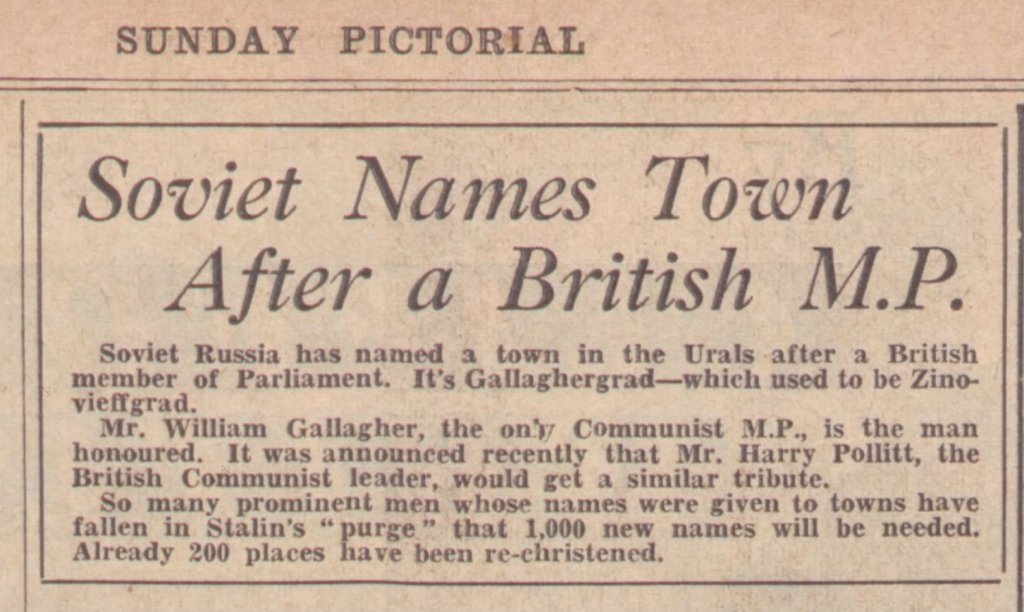
In October 1937, the Sunday Mirror noted that some 1,000 towns in the Soviet Union, named after prominent Bolsheviks, needed new names as those comrades had been purged by Stalin. One city, previously called “Zinovieffgrad”, was to be renamed “Gallaghergrad” – in honour of Britain’s only sitting communist member of parliament (see below). On a small pedantic point, this MP’s name was spelt Gallacher – not Gallagher.
The purge of “Rootless Cosmopolitans”
In the late 1940s, Stalin began a purge of what he termed bezrodnyi kosmopolit (rootless cosmopolitans). Any politically aware person knew this was a reference to Jewish intellectuals. However, initially, even Stalin was reticent to adopt an overtly anti-semitic stance. Yet as this weird purge got into top gear, the word “Jew” started to appear as a frequent term of abuse in communist party publications.
What makes this purge even more shocking is that the Red Army had only just liberated several Nazi concentration camps, including Auschwitz, in which millions of Jews were exterminated by the Third Reich. However in the immediate aftermath, Stalin downplayed the death of Jews, categorising all Hitler’s victims in the east as Soviet citizens.
When the Jewish Anti-Fascist Committee produced a detailed account of atrocities against Jews in Nazi-occupied Soviet territory during the war – the Black Book of Soviet Jewry – Stalin banned it in 1948.
This committee was a Kremlin-backed initiative intended to build western support for the Soviet Union as it faced invasion by Hitler. However, once the Nazis were defeated and Stalin felt secure once more, his paranoia led him to believe that committee members had become a little too close to Jewish organisations in the west.
So, they were arrested, tortured, and shot in the basement of the Lubyanka prison in August 1952, months before Stalin’s death. The mass execution of these Jewish intellectuals is referred to as the Night of the Murdered Poets. They included:
- Peretz Markish (1895-1952), a poet who wrote in Yiddish
- Dovid Bergelson (1884-1952), a poet who wrote in Yiddish
- Itzik Feffer (1900-1952), a poet who wrote in Yiddish
- Leib Kvitko (1890-1952), a poet who wrote in Yiddish
- Dovid Hofshteyn (1889-1952), a poet who wrote in Yiddish
Plus the medical director of the Moscow Jewish State Hospital and several others.
The Doctors’ Plot
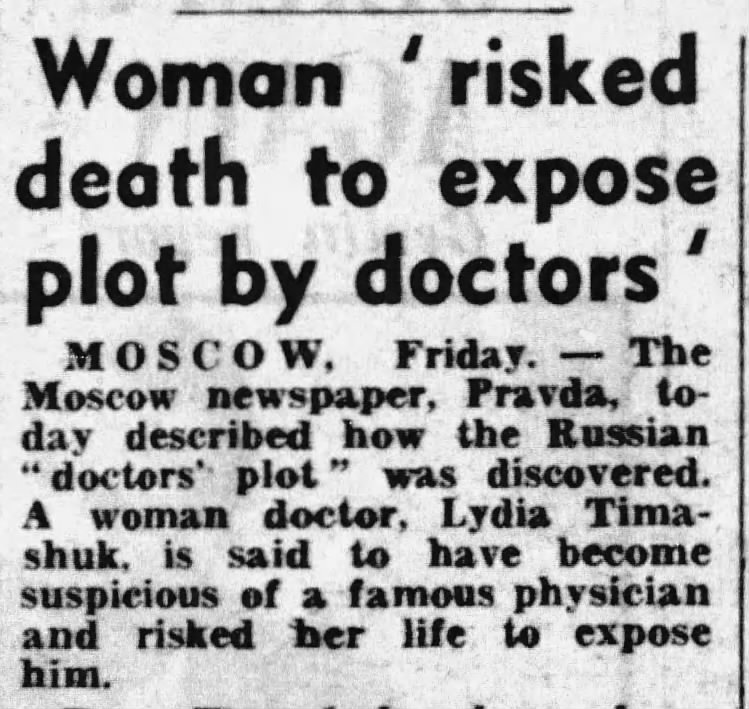
Stalin died in March 1953 but in the first quarter of that year, he managed to pack in one last purge – of Jewish doctors. According to the brooding Soviet leader, a group of medics were plotting to poison senior communist leaders. A female radiologist (sometimes described as a cardiologist), Lydia Timashuk, received the Order of Lenin for exposing this dastardly conspiracy.
When one doctor’s house was raided, a bottle of atropine was discovered in the medicine cabinet with a skull and crossbones on the bottle. This is a drug used to treat a slow heart rate. But the secret police thought otherwise. Here was proof that the doctor concerned was stockpiling poison to eliminate Soviet top brass.
State media whipped the population up into a frenzy to the point where the public refused to buy pills and ointments at their local pharmacy in case they were toxic. Rumours circulated that babies were being murdered by psychopathic obstetricians stalking maternity wards. One woman rejected penicillin from the family doctor accusing him of attempted homicide.
Following the usual purge pattern, doctors were arrested, imprisoned, roughed up during interrogation, and prepared for a show trial and execution. And then the unthinkable happened. Stalin died.
On 1 March 1953, Stalin was at the Kuntsevo Dacha, a private residence just outside Moscow. He was up until 4am watching movies and drinking with his inner circle of communist officials, including the secret police chief, Lavrentiy Beria. Then he went to bed. As was customary, he was not disturbed as he slept way into the day.
However, once the dear leader failed to emerge, his housekeeper, Motya, entered his bedroom at 11am to discover Stalin lying on the floor in his pyjamas, breathing heavily and having urinated himself. He had suffered a major stroke and was paralysed.
The chain of events that followed indicates either gross negligence or intentional neglect with the intention of causing death. Given that Beria was in charge, the latter is the most likely. Beria viewed himself as a contender for future leader of the Soviet Union. Given the grim fate of his predecessors – Yezhov and Yagoda – it was reasonable to anticipate a show trial and bullet in the brain at some point. For Beria, there was only way to avoid that scenario.
Others among the Soviet leadership felt the same. Why let Stalin unleash yet another great purge when it would more than likely consume many of them in the process? The doctors’ plot looked like the prelude to another bloodbath. There was only way way to stop that happening.
Medical assistance wasn’t requested until 7am the following morning. The doctors who arrived applied about eight leeches behind Stalin’s ears – an unusual way to treat a cerebral hemorrhage. This unorthodox treatment surely belonged in the realms of traditional folk healing than modern medicine. Ironically, having locked up Moscow’s leading doctors, the dying Stalin was left with the second division of Russian medics.
By 5 March, he was still clinging to life though vomiting blood and, according to his daughter Svetlana, lifting his hand in a threatening gesture as he finally passed away. Some have speculated that Stalin was poisoned with warfarin, not by Jewish doctors, but his own inner circle. Beria is the leading suspect.
As for Lydia Timashuk, she had her Order of Lenin taken back just a month after Stalin’s death. 1953 had begun so well for Timashuk with thousands of letters pouring into her hospital from patriots congratulating her selfless patriotism. Now, she was denounced as a liar.
Czech Show Trials of 1952
In 1952, Rudolf Slánský, general secretary of the Communist Party of Czechoslovakia was put on trial. He was part of a group of 14 alleged traitors, 11 of whom were Jewish. They were accused of being “foreign elements” and “Zionist spies”. Somehow they had been Zionist spies who had … spied for the Gestapo, the secret police of the Third Reich, which killed millions of Jews.
The show trial was broadcast live and was an audience ratings success. The judge granted most of them their appointment with the gallows, except for three who received life sentences.
After the majority were hanged, their bodies were cremated. In a rather ghoulish turn of events, a secret police vehicle which became stuck in icy and muddy road conditions used the ashes of the deceased to get moving again.
Slánský was no stranger to show trials having organised some himself. He was a veteran Stalinist who co-founded the Czech communist party in 1921 along with the country’s future leader, Klement Gottwald (1896-1953).
When the Nazis invaded Czechoslovakia in 1938, he joined other exiles at the Hotel Lux in Moscow, not realising that every night the NKVD paced the corridors brandishing a list of those Stalin wanted purged. Insomnia was widespread as occupants listened intently to the footsteps hoping they wouldn’t stop at their door. Shortly before Christmas 1943, his six-month-old daughter disappeared, never to be seen again. Gottwald told Slánský to stop grieving and just make another one.
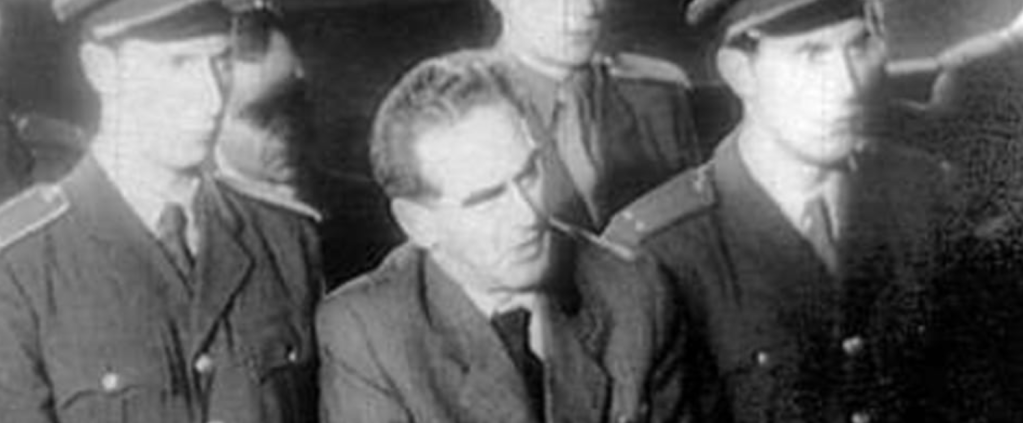
After the communists took power in Prague, it was Slánský who firmed up their control, purging opposition elements. Gottwald was often too drunk to make key decisions. So, Slánský in effect ran the country while his boss nursed yet another hangover.
However, Stalin was in purge mode by the end of the 1940s, targeting communists from Jewish backgrounds. When Slánský was arrested, he knew the game was up. It’s reported that he attempted suicide but once in the courtroom, he stuck to the script and dangled from a rope on 3 December 1952.
Another politician swept up in the show trial was former Czech foreign minister, Vladimír Clementis (1902-1952), pictured below. Like Slánský and Bedřich Geminder (1901-1952), head of the Czech communist party’s international section, he pleaded guilty. The verdict was a foregone conclusion so this was one last display of loyalty.
In court, Clementis delivered his confession in the lifeless tone of a dead man walking. In 1939, he had contacted French intelligence and passed state secrets on via successive United Kingdom ambassadors in Prague as well as the British Labour MP Konni Zilliacus (1894-1967). Interestingly, Zilliacus was accused by the author George Orwell of being a crypto-communist – though he leaned more towards Tito than Stalin.
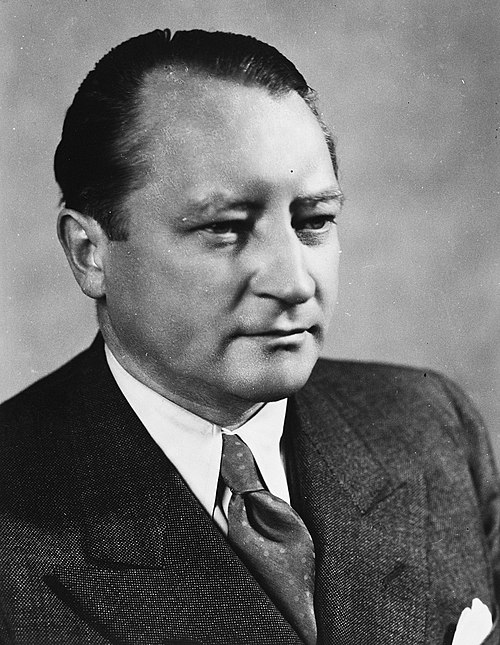
Romanian purge of 1952
Ana Pauker (1893-1960) was widely regarded as one of the most able communist operators in the eastern bloc countries and became the first woman to hold the post of foreign minister in the communist and non-communist worlds. However, by 1952, she was being accused of “deviations”.
Pauker deserves a Netflix biographical drama series. She was romantic and ruthless, allegedly denouncing her own husband as a Trotskyist and even, according to one source, shooting him dead in Stalin’s office to impress the Soviet leader!
Described rather unflatteringly by Time magazine as the “beefy First Lady of Communism”, she rose rapidly through the ranks of the Romanian communist party during the Second World War while her male comrades were imprisoned by the pro-Nazi regime. Once the communists, backed by the Soviet Union, took over Romania, she was sidelined into the foreign ministry. Not a bad way to be sidelined but Pauker undoubtedly possessed all the qualities of a Stalinist dictator.
By 1952, she had been denounced as a traitor and was on trial for her life – getting a taste of what she had inflicted on her own husband. The charges:
- Activities against the party and the state
- Support of counter-revolutionary elements
- Suppression of criticism
- Double-dealing opportunism
- Laziness in the development of collective farms
- Rightist deviations and…
- Leftist deviations!
Her nemesis was the man who became Romanian dictator instead of Pauker: Gheorghe Gheorghiu-Dej (1901-1965). He had spent years behind bars as a political prisoner at the Dej penitentiary, tacking the word “Dej” on to his surname. Rather like an American gangster choosing to style themselves Alphonse Capone-Alcatraz or Lucky Luciano-Sing Sing.
Pauker, born into a Jewish family, fell victim to the blatantly anti-semitic nature of Stalin’s later show trials. When the dear leader died in 1953, she was spared the death sentence, though placed under house arrest until her death from cancer in 1960.
Reportedly, when Pauker was informed that Stalin had died, she burst into tears – as did many of his victims, even in the gulags. A colleague snapped Pauker out of her sobbing fit, saying: “Don’t cry. If Stalin were still alive, you’d be dead”.
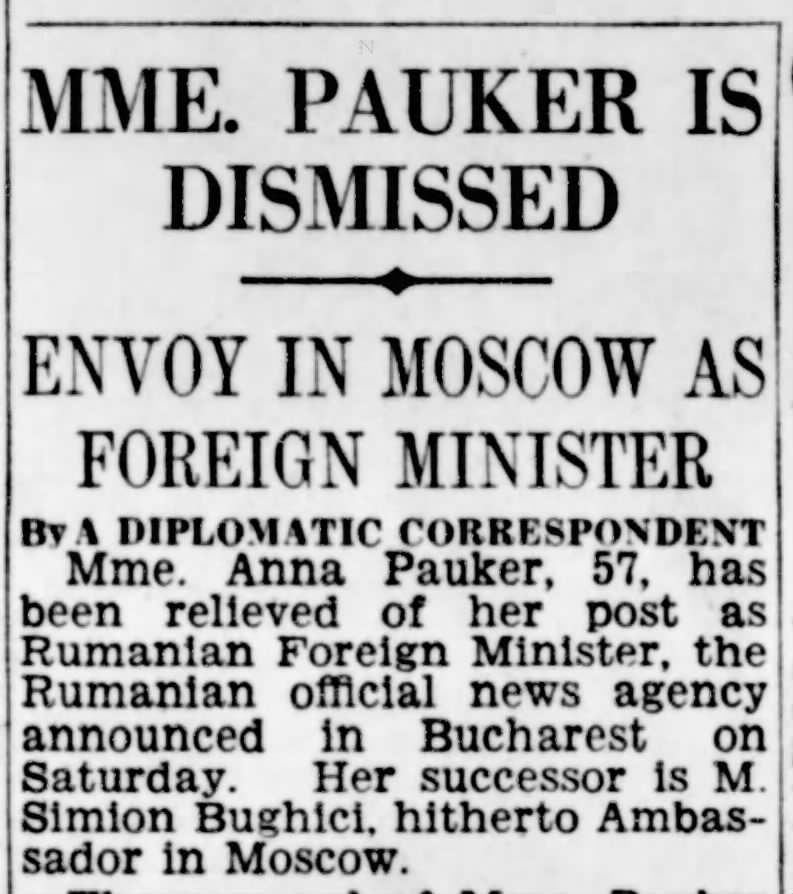
Poland’s Communists are purged by Stalin
In 1937, the the secretary-general of the Polish communist party, Julian Leński-Leszczyński (1889-1937), was invited to a meeting with senior Soviet officials at the Kremlin. He flew from Paris. It turned out to be a trap. On arrival, Leński-Leszczyński (pictured below) was arrested and executed not long afterwards.
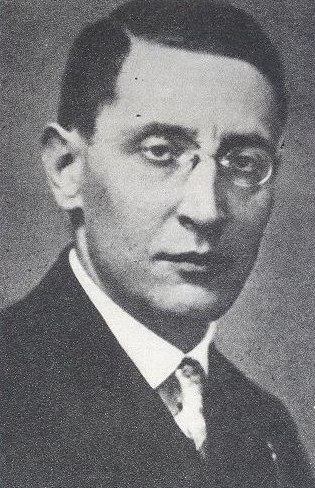
But this was just the beginning for the Polish communists. Through 1938 and 1939, Stalin shut down the communist party in Poland while he systematically eliminated its leadership and a huge swathe of party members.
Under the terms of NKVD Order No. 00485, both party members and non-communist Poles were targeted by the secret police as saboteurs and spies. It’s estimated that a shocking 111,091 people were executed.
Why did Stalin do this? It cannot have been unrelated to his decision in 1939 to sign the Molotov-Ribbentrop pact with Nazi Germany that divided Poland between the Third Reich and the USSR. In effect, Poland ceased to exist.
Conveniently, there were not many Polish communists left to raise any objections. Had they still been alive, they might have pointed out that the long dead Lenin once wrote about the right of nations to self-determination – a principle that was clearly alien to Stalin.
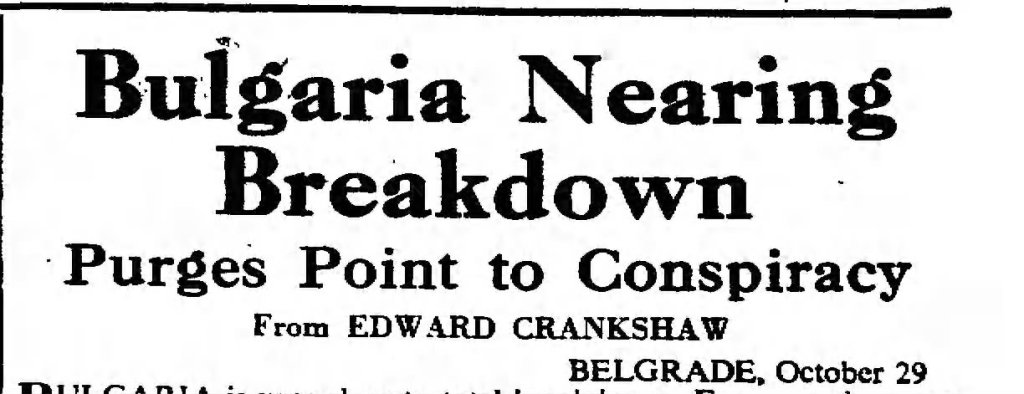
Bulgaria purges its renegades in 1949
In 1949, the first communist leader of the People’s Republic of Bulgaria, Georgi Dimitrov (1882-1949), died. Like Lenin, he was embalmed and placed in a mausoleum (pictured below). His body was removed in 1990 when the country abandoned communism.
Dimitrov achieved some fame in 1933 when he was arrested by the Nazis, accused of being a co-conspirator in the burning down of the Reichstag in Berlin. In court, he conducted his own defence so ably that the judge acquitted him. A Dutch communist, Marinus van der Lubbe (1909-1934), was less fortunate. He was found guilty and executed by beheading.
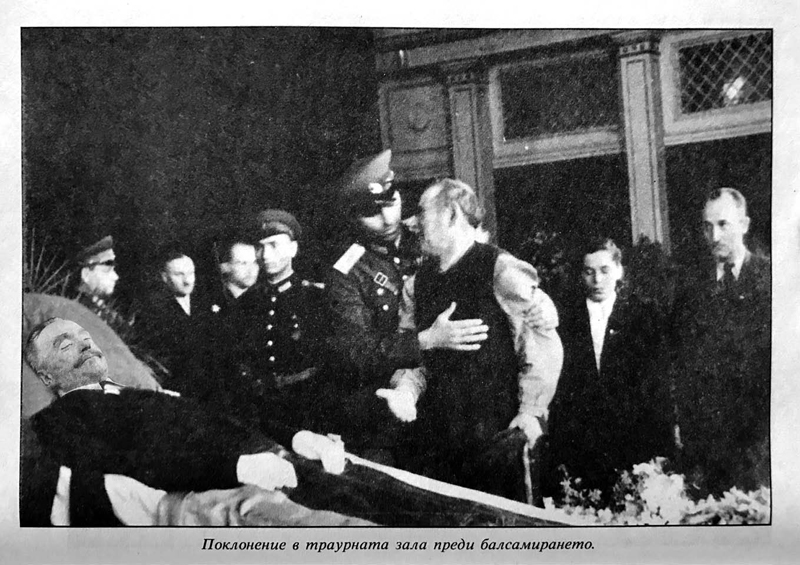
Dimitrov fled to the Soviet Union, where he was already a known quantity, and became a leading figure in the Comintern. Then after the Second World War, Stalin sent Dimitrov to his native Bulgaria to run the new communist state. His hardline approach to opposition earned him the nickname, the “iron broom”.
In his last months of his life, Dimitrov had to negotiate the souring of relations between Stalin and Yugoslavia’s communist dictator, Marshal Josip Broz Tito (1892-1980). Tito bravely navigated an independent path, breaking from Kremlin control. He also made overtures to the Bulgarians about creating an autonomous Balkan bloc that would push the Soviet Union away.
Dimitrov was put on the spot, responding with a forked tongue. One side of his mouth welcomed warming Bulgarian-Yugoslav relations while the other side echoed Moscow’s increasingly hysterical attacks on Tito. In July 1949, Dimitrov died at a sanatorium outside Moscow. Foul play was suspected.
His body was hardly cold when the Bulgarian communists, under enormous pressure from Stalin, began a purge of “Titoists” within their ranks. As with Soviet great purge of the 1930s, this wave of liquidations burned through the political and military leadership of the country.

The most prominent politician put on trial was Traicho Kostov (1897-1949), deputy premier and member of the Politburo. He was forced to write a 32,000 word confession, denouncing himself as an American agent. Reportedly, he was flown to Moscow for rehearsals of his testimony to make sure he got his self-denunciation correct and the delivery satisfied Stalin.
However, once in court, Kostov repudiated his confession and boldly declared: “I must say once again that I was never a police agent, never an imperialist spy”. For that act of bravery, he was excluded from the rest of the proceedings.
His attorney then argued for the death penalty for his own client, justifying this by stating: “In a Socialist state there is no division of duty between the judge, prosecutor and defence counsel.” Kostov was executed just 48 hours after the guilty verdict.
Anti-Titoist purge of party members in Albania in 1949
Alleged Titoists were also being purged in nearby Albania. The only satisfying thing about the arrest and show trial of leading communist Koçi Xoxe (1911-1949), pictured below, was that he had previously headed up the country’s secret police, the Drejtoria e Sigurimit të Shtetit or Sigurimi (security) for short, so knew a thing or two about liquidating opponents.
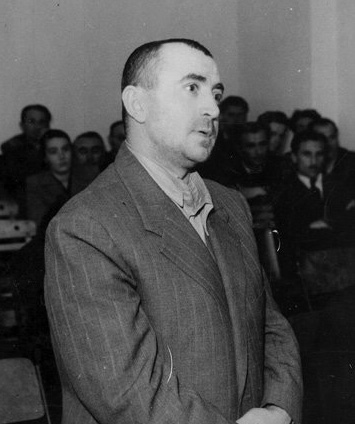
Tito wanted to absorb Albania into Yugoslavia as a single communist state. Stalin was initially sympathetic until he broke with Tito. After that, elements within the Albanian government who had sided with Tito over the planned merger of the two countries were regarded as enemies to be purged. This included Xoxe.
The Albanian dictator, Enver Hoxha (1908-1985), viewed Xoxe as an internal rival so was more than happy to liquidate him. At his show trial, Xoxe admitted that he was recruited as a western agent by the former Albanian monarch, King Zog (1895-1961).
The more brutal torture methods of the Sigurimi were detailed, including burning prisoners with gasoline and using red-hot tongs. Hoxha feigned disgust at such sadism within his secret police. If only he had known what a monster Xoxe was – things could have been different. Just five days after being found guilty, Xoxe was hanged on 11 June 1949.
This concludes my top ten Stalinist liquidations but if you have some faves from the archives – do share in the comments!
Categories: History
 Marxism Explained
Leave a comment